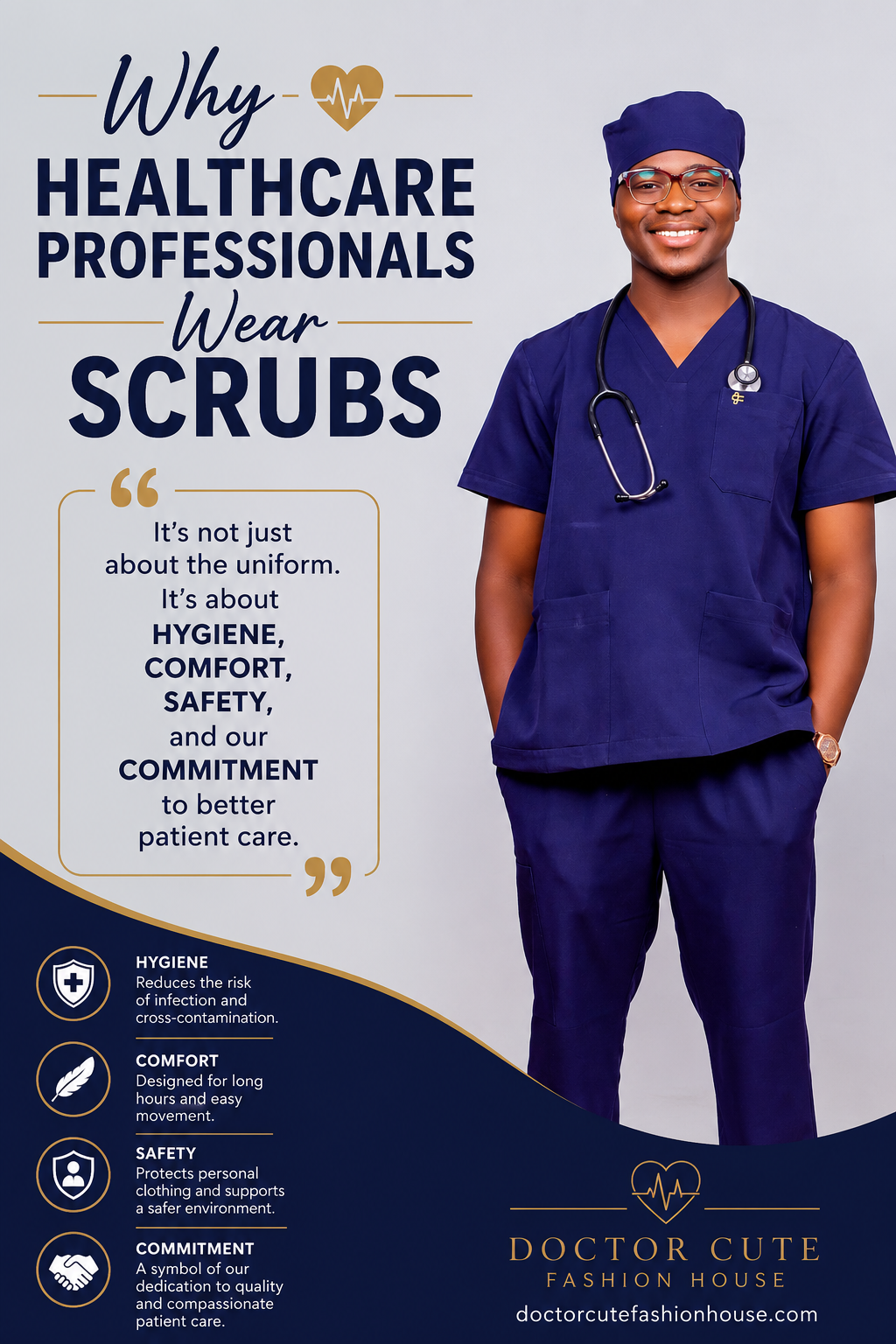
When you walk into a hospital, one of the first things you’ll notice is that most healthcare professionals are dressed in scrubs. Whether it’s a doctor, medical laboratory scientist, nurse, surgeon, pharmacist, physiotherapist, radiographer, dentist, or operating room technician, scrubs have become the universal symbol of healthcare. But have you ever wondered why healthcare professionals wear scrubs? Is it simply for uniformity, or is there a deeper purpose? The answer is yes. Scrubs serve several essential functions. They are designed to promote hygiene, improve safety, enhance comfort, support professionalism, and help healthcare workers perform their duties efficiently. Modern healthcare relies on scrubs not just as clothing but as an important part of infection prevention and patient care.
In this article, Doctor Cute Fashion House explores everything you need to know about medical scrubs, why they matter, and how choosing the right scrubs benefits both healthcare professionals and patients.
What Are Medical Scrubs?
Medical scrubs are specially designed uniforms worn by healthcare professionals while performing their duties. A standard scrub set consists of a V-neck or round-neck top paired with matching trousers, although today’s scrubs come in many styles, including jogger pants, scrub jackets, maternity scrubs, and fitted designs. Unlike ordinary clothing, scrubs are made from durable fabrics that can withstand repeated washing at high temperatures. They are lightweight, breathable, and designed to allow healthcare workers to move comfortably during long shifts. Although scrubs were originally worn only by surgeons and operating room staff, they are now used across hospitals, clinics, laboratories, dental practices, pharmacies, emergency services, and veterinary hospitals.
Why Are They Called “Scrubs”?
The word “scrubs” originated from the phrase “scrubbing in.” Before entering an operating room, surgeons and surgical staff thoroughly scrub their hands and arms with antiseptic solutions to reduce the risk of infection before surgery. The clean clothing worn during this process became known as scrubs, and over time, the name extended to the uniforms worn by healthcare professionals in many medical settings.
Who Wears Scrubs?
Today, scrubs are worn by a wide range of healthcare professionals, including:
Doctors
Nurses
Surgeons,
Medical Laboratory Scientists
Pharmacists
Dentists
Dental Assistants
Radiographers
Physiotherapists
Operating Room Technicians
Midwives
Emergency Medical Personnel
Veterinary Doctors and Nurses
Healthcare Assistants
In some hospitals, even housekeeping and support staff wear scrubs to maintain hygiene and create a professional working environment.
Why Healthcare Professionals Wear Scrubs
To Help Prevent the Spread of Infection: One of the primary reasons healthcare professionals wear scrubs is infection prevention. Healthcare workers frequently come into contact with blood, body fluids, bacteria, viruses, and other potentially infectious materials. Wearing dedicated medical attire helps reduce the transfer of microorganisms between patients, staff, and different clinical areas. Scrubs are easy to change if they become contaminated and are designed to withstand frequent laundering. While scrubs alone do not prevent infections, they are an important part of broader infection prevention practices that also include proper hand hygiene and the use of personal protective equipment (PPE) when necessary.
To Protect Personal Clothing: Healthcare work can be unpredictable. During a single shift, a professional may be exposed to blood, medications, chemicals, or other substances that could stain or contaminate everyday clothing. Scrubs act as a protective outer layer. If they become soiled, they can be removed and replaced quickly, helping to keep personal clothing clean and reducing unnecessary exposure.
To Promote Comfort During Long Shifts: Healthcare professionals often spend many hours on their feet, moving between patients, climbing stairs, lifting equipment, and responding to emergencies. Scrubs are specifically designed for comfort. Most are made from lightweight, breathable fabrics with enough flexibility to allow unrestricted movement. Modern designs often include stretch materials that make bending, reaching, and lifting easier. Comfort is not just about convenience; it helps healthcare workers stay focused on patient care throughout demanding shifts.
To Improve Mobility: Imagine trying to perform CPR, assist during surgery, or push a hospital bed while wearing restrictive clothing. Scrubs are loose enough to allow freedom of movement while remaining professional in appearance. Many modern scrubs feature ergonomic cuts and stretch panels that support mobility without sacrificing durability.
To Maintain a Professional Appearance: Patients often associate clean, well-maintained scrubs with competence, cleanliness, and professionalism. Professional attire helps reassure patients that they are being cared for by trained healthcare personnel. It also creates a sense of unity among healthcare teams and contributes to a respectful clinical environment. A neat appearance reflects attention to detail; an important quality in healthcare.
To Make Healthcare Workers Easy to Identify: Many hospitals use colour-coded scrubs to distinguish departments or professional roles. While colour systems vary between healthcare institutions, they help patients and staff quickly identify members of the healthcare team. For example:-
Blue or green scrubs are commonly worn in surgical areas.
Navy blue is often associated with nursing staff.
Burgundy may be assigned to laboratory personnel.
Grey or black may be used by administrative or support staff in some facilities.
These colours are not universal, but they improve organisation and communication within healthcare settings.
To Support Workplace Safety: Medical environments present unique occupational hazards. Healthcare professionals may encounter sharp instruments, biological materials, and hazardous chemicals. Quality scrubs are designed to withstand demanding work conditions. Their durable construction reduces the risk of tearing, while their practical design allows healthcare workers to carry essential tools securely in well-placed pockets.
To Save Time: Healthcare professionals already have busy schedules. Wearing scrubs eliminates the need to choose work outfits each day. Many hospitals provide guidance on acceptable scrub styles and colours, making it easier for staff to prepare for work while maintaining a consistent professional appearance.
What Are Medical Scrubs Made Of?
Medical scrubs are commonly made from blends of: cotton, polyester, rayon, spandex (for added stretch). These fabrics are selected for their durability, comfort, breathability, and ability to withstand frequent washing. Many modern scrubs also feature moisture-wicking technology to help keep healthcare professionals comfortable during long shifts.
Different Types of Medical Scrubs
Medical scrubs are no longer one-size-fits-all. Today, healthcare professionals can choose from a variety of styles, including:
Classic fit scrubs
Modern fit scrubs
Jogger scrubs- Stretch scrubs
Maternity scrubs
Petite and tall scrubs
Surgical scrubs
Scrub jackets
Unisex scrubs
Choosing the right style depends on comfort, workplace requirements, and personal preference
Frequently Asked Questions(FAQS)
Why do surgeons usually wear blue or green scrubs? Blue and green reduce glare from bright operating room lights and provide visual contrast against the red colour of blood, helping reduce eye fatigue during long surgical procedures.
Can scrubs spread germs? Like any clothing, scrubs can become contaminated. This is why they should be changed when soiled and washed regularly according to recommended hygiene practices.
Can healthcare workers wear scrubs outside the hospital? Policies vary by healthcare facility. Some institutions discourage wearing clinical scrubs outside the workplace to reduce the possibility of carrying contaminants into public spaces.
How many pairs of scrubs should a healthcare professional own? Many professionals own at least three to five pairs so they always have clean scrubs available between laundry days, though the ideal number depends on work schedules and employer policies.
Healthcare professionals wear scrubs for reasons that go far beyond appearance. Scrubs help support infection prevention, protect personal clothing, improve comfort during long shifts, enhance mobility, promote professionalism, and make healthcare workers easily identifiable. They have become an indispensable part of modern healthcare because they contribute to safer, more efficient patient care.Whether you are a medical student preparing for clinical rotations, a seasoned healthcare professional, or someone shopping for reliable medical apparel, investing in high-quality scrubs is a smart choice. The right scrubs combine comfort, durability, functionality, and style qualities that every healthcare worker deserves.
At Doctor Cute Fashion House, we are committed to providing premium medical wear that empowers healthcare professionals to look confident, feel comfortable, and perform at their very best every day.